Go to Blogger edit html and find these sentences.Now replace these sentences with your own descriptions.This theme is Bloggerized by Lasantha Bandara - Premiumbloggertemplates.com.
Go to Blogger edit html and find these sentences.Now replace these sentences with your own descriptions.This theme is Bloggerized by Lasantha Bandara - Premiumbloggertemplates.com.
Go to Blogger edit html and find these sentences.Now replace these sentences with your own descriptions.This theme is Bloggerized by Lasantha Bandara - Premiumbloggertemplates.com.
Go to Blogger edit html and find these sentences.Now replace these sentences with your own descriptions.This theme is Bloggerized by Lasantha Bandara - Premiumbloggertemplates.com.
Go to Blogger edit html and find these sentences.Now replace these sentences with your own descriptions.This theme is Bloggerized by Lasantha Bandara - Premiumbloggertemplates.com.
Apa yang Anda bayangkan saat beberapa bulan lalu Konami
mengumumkan akan menghadirkan game sepak bola andalan mereka, Pro
Evolution Soccer 2014 dengan menggunakan engine baru: Fox Engine? Sebuah
game Pro Evolution Soccer yang benar-benar baru? Atau justru Anda
merasa Konami tidak perlu menghadirkan banyak perubahan, selain dari
engine, ke dalam game baru tersebut?
Menu utama dari PES 2014, berbeda struktur dari menu utama yang ada di beberapa edisi terakhir seri Pro Evolution Soccer.
Apapun hal yang Anda bayangkan terkait penggunaan Fox Engine untuk
PES 2014 tersebut, Konami akhirnya merilis game tersebut minggu lalu.
Anda yang mungkin sudah sempat mencoba game tersebut tentu memiliki
beragam opini terkait game tersebut, sebagian mungkin positif, sebagian
lain mungkin negatif. Hal itu menurut kami cukup wajar, mengingat
penggunaan engine baru pastinya akan membawa banyak perubahan dalam game
tersebut.
Tim JagatPlay sendiri sudah mencoba game Pro Evolution Soccer 2014
tersebut beberapa waktu setelah peluncurannya. Banyak pengalaman baru
yang kami dapatkan selama memainkan game tersebut. Kami akan coba
merangkum pengalaan-pengalaman kami selama mencoba game tersebut dalam
artikel review ini. Selamat membaca!
Fox Engine: Pembawa Perubahan
Detail
visual dan animasi pergerakan yang lebih baik dibandingkan sebelumnya
menjadi hal positif yang dibawa Fox Engine ke PES 2014.
Hadirnya Fox Engine ke dalam PES 2014 langsung membawa dampak bagi
kualitas grafis dari game tersebut. Kini, penampilan visual pemain
terlihat lebih baik bila dibandingkan dengan edisi-edisi sebelumnya,
termasuk detail wajah. Sayangnya, untuk detail wajah, versi awal dari
PES 2014 ini hanya menyertakan beberapa pemain saja dengan wajah yang
mirip dengan wajah asli sang pemain. Menurut kabar, Konami tengah
menyiapkan update yang akan memperbaiki detail wajah dari sebagian besar
pemain dalam game tersebut.
Arjen Robben, salah satu pemain yang wajahnya digambarkan dengan cukup baik di PES 2014 ini.
Untuk pergerakan, Fox Engine juga membawa perubahan dalam kualitas
animasi pergerakan. Kini, Anda akan menemukan animasi pergerakan yang
lebih nyata bila dibandingkan dengan edisi sebelumnya. Secara umum,
lebih baiknya animasi pergerakan pemain ini tidak terlalu berimbas pada
gameplay dari PES 2014. Namun, animasi yang lebih baik tersebut tentu
akan memanjakan mata pemain yang tengah memainkan game ini.
Sistem Kontrol: Serupa Tapi Tak Sama
Merebut bola dari lawan kini dapat dilakukan dengan sedikit memberikan tekanan fisik kepada lawan dengan bantuan analog kanan.
Secara keseluruhan, sistem kontrol pemain yang ada di PES 2014 tidak
jauh berbeda dengan kontrol yang ada di edisi-edisi sebelumnya. Konami
hanya memberikan beberapa penyesuaian yang membuat kontrol di game baru
ini terasa lebih responsif dibandingkan dengan edisi-edisi sebelumnya.
Selain itu, terdapat beberapa hal baru yang dapat dengan mudah dipahami
terkait sistem kontrol baru tersebut, salah satunya adalah cara untuk
merebut bola dari pemain lawan.
Gerakan mengecoh lawan dapat dilakukan dengan kombinasi pergerakan kedua analog.
“Advanced” Through Pass.
Through pass “basic” masih bisa Anda gunakan bila Anda kurang menyukai kontrol baru yang dihadirkan Konami.
Konami juga memperkenalkan kontrol through pass dan shooting baru
yang disebut sebagai kontrol “Advanced”. Untuk through pass, kontrol
baru tersebut akan menghadirkan semacam penanda arah passing yang bisa
diatur pemain dengan analog kanan. Sedangkan untuk shooting, kontrol
baru tersebut akan membawa sedikit perubahan pada cara mengatur arah
shooting pemain. Bila pemain tidak terbiasa dengan kontrol tersebut atau
memang lebih menyukai cara lama, Konami menyediakan opsi untuk mengubah
kontrol through pass dan shooting ke mode “Basic” yang sama dengan
edisi sebelumnya.
Kontrol set piece baru diperkenalkan Konami di PES 2014.
Hanya saja, Konami menghadirkan cukup banyak perubahan untuk
kombinasi tombol kontrol di PES 2014. Berbagai kombinasi tombol yang
digunakan untuk mengeluarkan trik-trik tertentu dipetakan ulang,
sehingga untuk dapat menguasai trik-trik yang sama, seorang pemain harus
terlebih dahulu mempelajari ulang kombinasi-kombinasi tombol yang ada
dalam game ini, misalnya untuk melakukan kontrol off the ball, trik
mengolah bola, crossing, dan lain sebagainya
Recomended System Requirements :
Operating System: Win Xp 32, Vista, Windows 7, Windows 8
Graphic Card: GeForce GT 440, Radeon HD 5550 1024MB
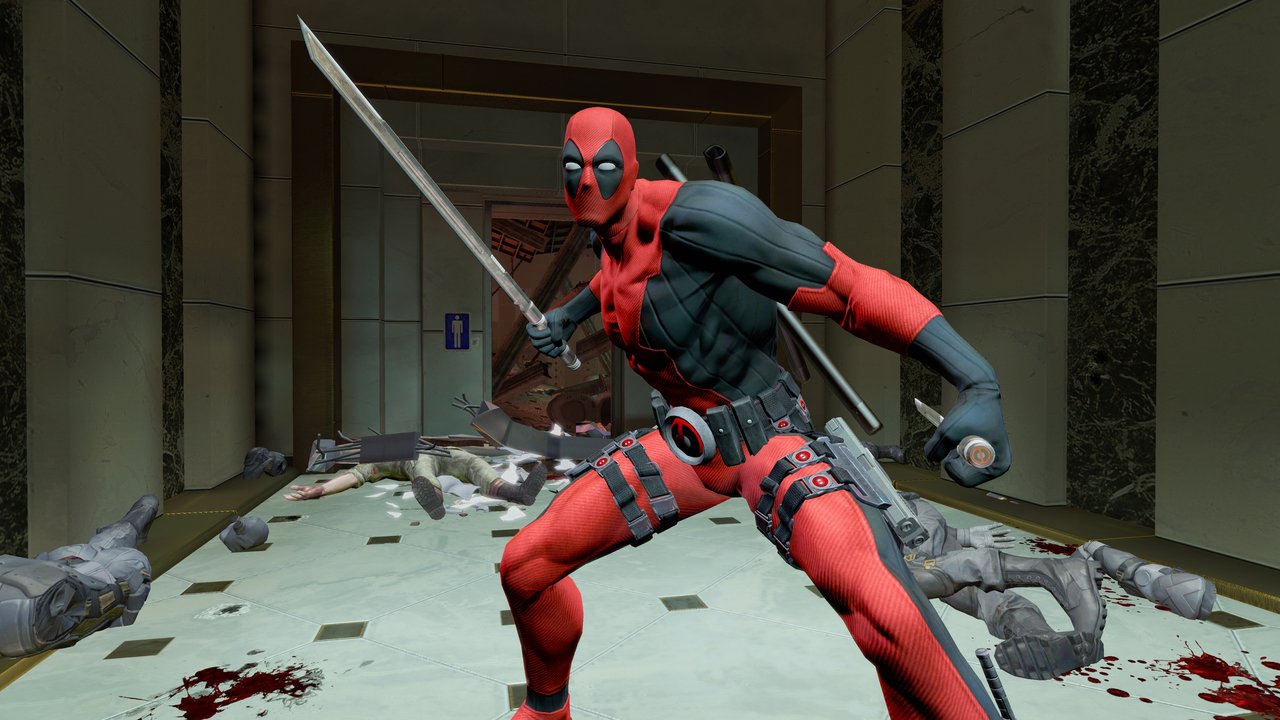
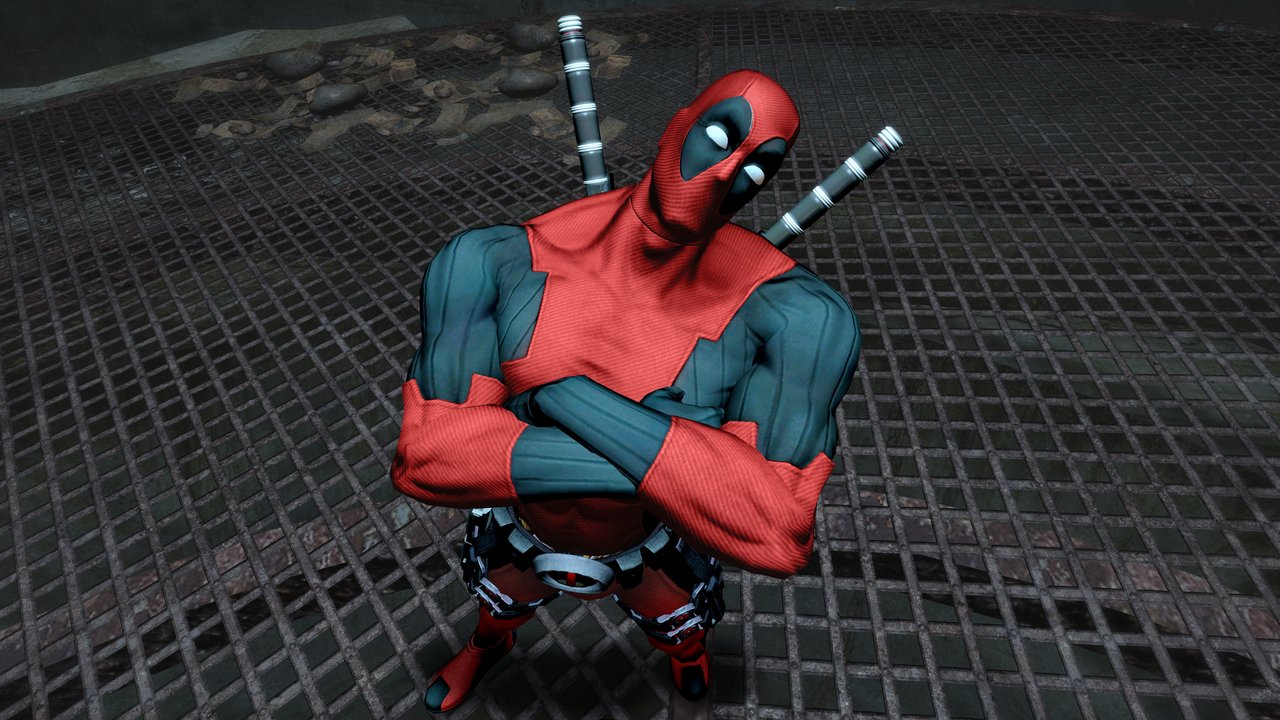
OFFICIAL SYNOPSIS FROM DEADPOOL HIMSELF: There are a few important things I need to say before you crack into my insanely sweet game. (Oof. Here we go again.) I’m a mercenary with an accelerated healing factor. I’ve been described as unstable, which is just plain coo-coo. (Wait, do sane people say coo-coo?) I’m gonna battle for the safety of humans and mutants. (And even mumans.) Be prepared for just about anything. (Holla!)
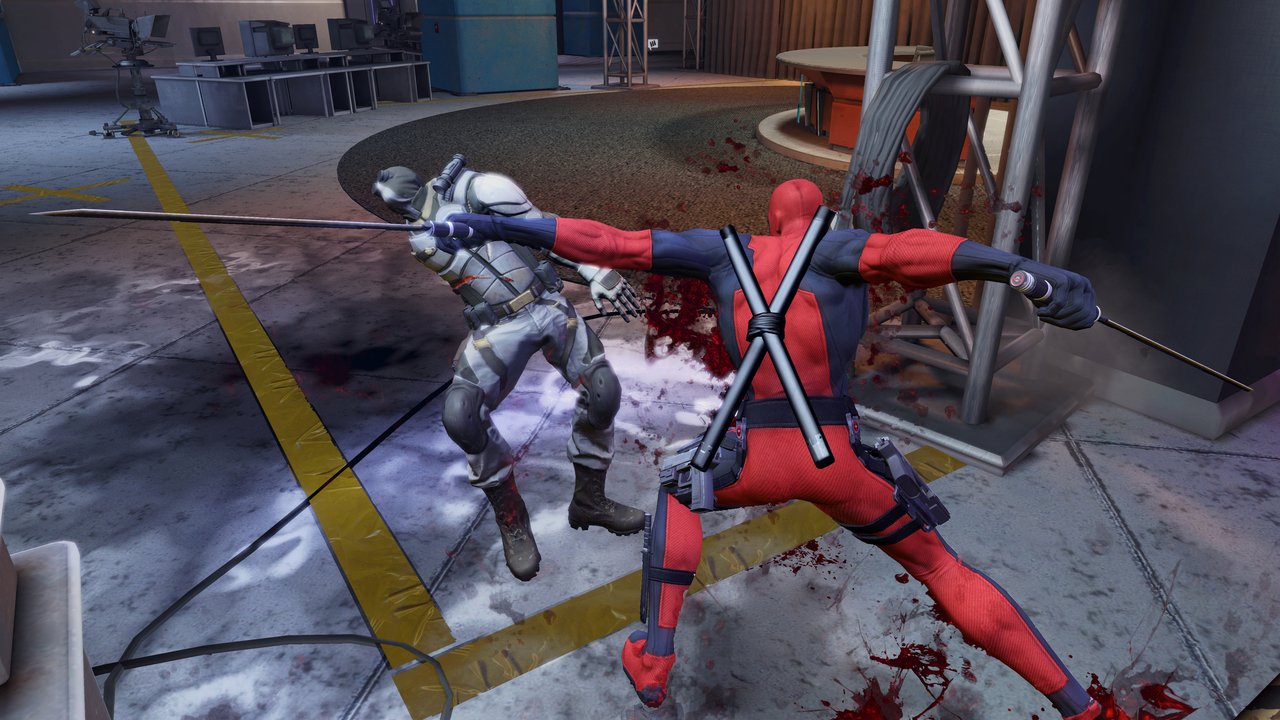
Key Features: * Let’s Get Some Action: I made sure to capture all my good sides, so I made my game a third-person, action-shooter. (Yep, you get to look at my heinie.) * X-Men Groupies: Keep a look out cuz some of my X-Men pals (Whoa, What Pals?!) are making an appearance. * Insane Combat: I’m really good at killing, so I made it a blast stringing together combos and totally eviscerating my enemies. (Ev-is-cer-a-ting!) * Weapons Galore: I brought my skills and a buttload of my favorite things. Katanas (check), guns (bang!), explosives (boom), duct tape (quack), and of course, yours truly ? ME! (Checkmate!)
Merc with a Map Pack: After an entire game of humiliating goons, there are still bad guys out there who think they can cha-cha with Deadpool. So to meet market demand for my unique brand of butt-kicking, I’m unleashing my “Merc with a Map Pack”, adding two new maps to Challenge Mode, starring yours truly against increasingly brutal waves of enemies:
* GRT Plaza: Mr. Sinister’s clone army has taken over, but I’m imposing a strict ‘no loitering’ ordinance. * Inside the Tower: Mr. Sinister’s goons are having a party in his new digs so I’ve decided to crash and give free bullets for everyone. * Master each map to move up to Infinite Mode, where the mayhem doesn’t stop. I should also mention Infinite Mode features two new, form-fitting suits for my wardrobe. * D-Pooly: Some looser threads to give my goods a rest from that chafing spandex. * Uncanny X-Force: Dark and slimming – the perfect accessory for a chimichanga binge. * C’mon! You never buy me nice outfits! Just download it already! Available for limited time.
System Requirements :
Minimum: OS:Windows 8, Windows 7, Windows Vista, Windows XP Processor:Intel Core 2 Duo E8200 @ 2.66 GHz or AMD Phenom X3 8750 Memory:2 GB RAM Graphics:GeForce 8800 GT series with 512 MB RAM or ATI Radeon HD4850 with 512MB RAM DirectX®:9.0c Hard Drive:7 GB HD space Sound:DirectX® 9.0c or later Other Requirements:Broadband Internet connection Additional:Internet connection is for Steam only. No online MP.
The gameplay of Dark is based on stealth combat. Eric has many supernatural vampiric 'skills' at his disposal; he can use Shadow Leap to quickly teleport to different areas and to perform stealth finishers, make himself temporarily invisible, see in the dark and slow down time. His abilities are linked to a certain amount of 'blood points' which are used up each time Eric uses a skill. He can drink blood from his enemies to restore his health and blood points. System Requirements :
DOWNLOAD : http://pan.baidu.com/share/link?shareid=387230748&uk=1664544199 Pilih part yang mau di download Klik Tombol Buat Download Kalau Di Minta Username Dan Password --> Pilih Refresh Download Address Di IDM
Create your ideal city, the decision to build at all levels of the city, the living which Sims motivated. Every decision, whether large or small, will have real consequences. Investment in heavy industry will make the economy soar, but it will cause pollution, affect the health of your Sims. Implementation of green technology will improve the lives of your Sims, but there is the risk of high tax rates and high unemployment. Team up with your friends to solve the global crisis: the launch of the space shuttle, to reduce carbon dioxide emissions, or the construction of a magnificent spectacle. Ranked in the global and regional championship contest, to become the richest, the worst, the happiest or the most desirable tourist place! System Requirements :
Minimum
Recommended
Windows
Operating system
Windows XP/Vista/7/8
Windows 7/8
CPU
AMD Athlon 64 X2 Dual-Core 4000+ or better, Intel Core 2 Duo Processor 2.0GHz or better
Intel Core i5 or faster
Memory
2GB
4GB
Hard drive space
12GB
Graphics hardware
ATI Radeon HD 2x00 or better nVidia 7800 or better. Intel Series 4 integrated graphics or better. Minimum of 256MB of on-board RAM and Shader 3.0 or better support
Remember
Me is brimming with promise. It desperately wants to play up some big
ideas – the fallibility of memory, the constructed nature of identity –
and while its ambition is admirable, sadly its best ideas don’t really
find their way into the gameplay itself. They’re limited, on the whole,
to ponderous cutscenes, while the action between is straightforward and
not terribly well executed. Similarly, the world that’s been created is
vibrant and distinctive – a futuristic version of Paris where memories
have become digital commodities, huge corporations have dubious access
to everyone’s past, and junkies addicted to the recollections of others
subsist in the fetid sewers. It’s an intriguing dystopia where the mind
has soured, but we never really get to explore it.
Remember Me only occasionally makes the most of its
interesting subject matter to make us feel like the skilled manipulator
of memories that our character, Nilin, is supposed to be. These are the
Memory Remix sequences, of which there are just four in the entire game.
In these sections you don’t control Nilin directly – instead you scrub
through an interactive timeline of someone else’s past, changing
seemingly insignificant details to effectively rewrite their
recollection of history. In one sequence, for instance, you must make
your target believe they've murdered someone they love – there are
different ways of achieving this, but one step involves removing the
safety catch from a handgun. Even though there’s a significant element
of trial and error to these sections, they work really well – I felt
like I was dabbling with the memories of others, reshaping their version
of reality. The scrubbing through the past works fantastically well,
and it’s during these four sequences that Remember Me really feels like a distinctive experience.
But again, Memory Remixes are few and far between. The bulk of Remember Me’s gameplay is composed of competent but unremarkable combat and some quite bland platforming sections.
Combat just isn’t expressive, and
consists largely of learning four pretty straightforward combos. Simple
combat can be satisfying – take Rocksteady’s Batman games, for example –
but Remember Me forgets to include a parry system, so it constantly
makes me feel like I'm evading my attackers instead of taking them on.
Equally disappointing, Nilin’s fighting style isn’t that interesting to
watch, and barring a huge mech that projects an image from a
black-and-white movie as its mouth, ironically none of these enemies are
very memorable.
What nuance there is to combat comes from entering the
Combo Lab, a place where you can freely customise your attacks with
effects that inflict damage, regenerate health, or cool down one of your
more powerful attacks. If, say, you’re extremely low on health, it’s
useful to jump into the Combo Lab and quickly construct an attack
entirely composed of "Regen Pressens" to restore part of your health
with every attack. This system does make the relentless combat
situations a tad more interesting, as you actually have to tinker with
your combos when facing particular types enemies early on. But once I
unlocked enough Pressens to dedicate a combo to each perk, I pretty much
forgot about visiting the Combo Lab ever again.
Combat gains a touch of variety in the form of S-Pressens,
extremely powerful attacks that are gradually unlocked. But while they
provide nice visual flourishes, they don’t really add much to gameplay
in general. They’re solutions, you see – special moves designed with a
very particular enemy or situation in mind. Sensen D.O.S reveals
invisible enemies and cancels special powers, and unsurprisingly you’ll
only ever use it when you meet this particularly type of foe. It’s
because they don’t elegantly fold into the existent combat system,
granting you more creativity; they each have quite long cooldown
periods, making it impossible to integrate them into your fighting
style.
When you’re not fighting, you’re climbing – up drain pipes,
across window ledges, and between rooftops – but none of this traversal
is remotely exciting. There’s no suspense. Nilin makes every jump. Even
if you’ve slightly misjudged the distance, don’t worry: you’ll be
pulled, almost magnetically, towards your destination. But what’s most
undermining is the pair of orange chevrons that constantly tells you
which ledge you should jump to next. It’s meant as benevolent reminder,
I’m sure... but it’s so insistent, so vibrant, that it has quite a
destructive effect on the atmosphere. I involuntarily focused on it so
intently that the world around Nilin began to fade – all I saw is that
nagging sign beckoning me to the next ledge. I want to explore, to
rummage around in all of the interesting shops and back alleys, but
there’s no scope to do so – those orange markings are always waiting,
ready to move you along.
It’s such a shame, because I’m genuinely curious about the
world of Remember Me. The decline of its city into madness and the
plight of its forgetful people is suggested in the lovingly crafted
cutscenes. Each shop sign has been thoughtfully designed, the camera
angle is artfully controlled – but it all lacks a degree of real
interactivity to really flesh out this intriguing dystopia. Gameplay is
perfectly competent – it all works, I hit no significant glitches – but
it fails to really satisfy or thrill, and after a while, fighting horde
after horde of similar enemies becomes tedious.
The Verdict
Remember Me is a likeable, even admirable game
that tells a deeply personal story in a thoughtfully-fashioned world
populated by richly detailed character models. But ultimately, it failed
to challenge or excite me as a game, as all of its best ideas are
confined to its overarching fiction rather than its gameplay. I rarely
felt like a Memory Hunter except for the few Memory Remix sections. I’d
love to spend time in this world sampling its fiction and tasting some
of its ideas, but unfortunately I can’t say the same for the game, which
is very forgettable.
Developer : 4A Games
Publisher : Deep Silver
Genre : Action FPS
Platform : PC / Windows
Release date : May 14th, 2013
USA : May 14th, 2013
Europe : May 17th, 2013
Play mode : Single player
Media Size : 2 DVD-8GB
Game language : English+
Age requirements: 18+ Mature
Getting everything out of Metro: Last Light
requires slow and patient play. In a post-apocalyptic adventure that
relies a great deal on constant bits of exposition, the experience
quickly grows into something much more than just your everyday shooter.
The more time you spend exploring, listening, reading, and watching, the
more you appreciate what 4A Games has created: an interesting
story-driven single-player-only FPS. It undoubtedly rewards methodical
players.
Getting through Metro: Last Light also requires a different kind of
patience, the kind that lets you forgive occasionally uneven play,
questionable AI, and a story that starts strong but ends flat. These
issues aren’t enough to sink Last Light – it’s most certainly a good
game – but 4A Games’ latest foray is certainly hindered by them.
Thankfully, Last Light on PC is technically superior to its console
brethren, and doesn’t suffer from issues found on PS3 and 360, such as
texture loading problems, occasional screen-tearing and lock-ups.
Inspired by the Metro universe created by author Dmitry Glukhovsky,
Last Light is a follow-up to 2010’s Metro 2033’s riveting story of the
years following a mutually assured destruction nuclear holocaust from
the Russian point of view. Metro: Last Light shows this world-changing
event in a stunning opening cutscene that illustrates the bombardment of
Moscow as Russia launches its own missile stockpile, when it’s already
too late for anything but revenge. By the time you jump in, decades have
passed since that fateful day. Survivors are packed into the dark and
always-dangerous subway tunnels under the dilapidated, radioactive
capital city.
You’re cast as one of these survivors, a ranger named Artyom, the
hero of Metro 2033 returned for another valiant adventure. Artyom, along
with his group of survivors -- and innocent
bystanders in general -- find themselves caught with increasing
frequency in the middle of warring factions in the metro, a situation
made all the more dangerous and untenable by the mutated creatures that
live both in the tunnels and on the surface. Metro’s world is tangibly
dangerous and rife with terror, with a feeling of risk and foreboding
around virtually every corner. The political thread that connects
everything – how surviving factions lucky just to be alive could still
be at each other’s throats -- makes the situation that much more
interesting.
Last Light presents itself linearly, but it does a wonderful job of
setting up plenty of context for your actions and goes to great lengths
to make itself more than just another shooter as it alternates between
missions that are action-packed and those that are slower and more
deliberate. The latter are what make Last Light truly shine, for it’s
here that you get to experience the careful attention to detail that 4A
Games has packed into its dystopian adventure. The mood and atmosphere
pad gametime with something more meaningful than loading screens and bad
dialogue (though Last Light’s dialogue is littered with
sometimes-abysmal Russian accents).
Exploring the various outposts and settlements you encounter conjures
up tangible thoughts about what a post-apocalyptic situation would be
like. Some of the better locations successfully transport players to
this fictional place and time in question. Factory manufacturing is no
more, large-scale agriculture is impossible, everything that already
exists suddenly has a new, ingenious use, and just about anything you
can hold in your hand – from an old postcard showing the colorful
pre-war world to finely made bullets that act as currency – is precious.
Precious, too, is electricity, clean water, and breathable air, the
latter of which becomes essential to gameplay as you constantly have to
juggle gas masks and filters to scrub the atmosphere’s isotope-laden
oxygen.
But there’s more in Last Light than just things to look at. Discovery
also comes through conversation, and while Artyom is your typical
silent protagonist, everyone around you has a great deal to say, even if
they’re not talking directly to you. You can spend a great deal of time
listening to these conversations, building context for and
understanding of the plight of the metro’s survivors, holding on to life
by a mere string. You can even see things from Artyom’s point of view
in the form of journal entries strewn around the tale’s various
chapters. In a clever twist, these weren’t written by others; when
found, Artyom will write notes to himself in his journal, working around
his silent posture and providing players with one of two ways you get
insight from the protagonist himself. The only time you ever actually
hear him speak is during load screens when he verbally explains what’s
coming up next.
Last Light’s plot weaknesses are readily visible, too. It starts out
strong and really got me into Artyom’s plight – which I won’t elaborate
on here – but things get muddled towards the end. With a chance to focus
more on the survivors, their settlements, and individual stories, Last
Light ends up getting mired down in a more supernatural tale that’s
simply not as interesting as everything grounded in post-apocalyptic
reality. By the last third of the game, I was longing for more about the
Nazis and Communists (yes, both faction factions survived the
apocalypse) and less about otherworldly entities. When it matters, Last
Light chooses to ignore the politics and personalities that prove far
more interesting.
There’s plenty of action to be had in Last Light, though its gameplay
isn’t as strong as its presentation. This isn’t a guns-blazing shooter;
at least, it’s not meant to be. It’s a stealth-first game that changes
between bouts of forced action and slow-paced, methodical sequences that
dare you to keep quiet and stay out of sight. Little things, like
crouching while walking and unscrewing light bulbs or extinguishing oil
lamps can leave your foes at a disadvantage and give you the edge,
though Last Light’s predictable and easy-to-manipulate enemy AI removes
much of the drama if you want to play with a stealth slant.
Indeed, getting through most stealth sequences requires stunningly
little thought, and only late in the campaign are you in any real danger
of running into trouble. Simply outmaneuvering, flanking, and
backstabbing -- or knocking unconscious -- adversaries is the name of
the game, though there doesn’t seem to be much of a point in letting
anyone live by merely clocking them in the skull. When they are grouped
together and talking, you usually have to wait for them to stop and walk
away. If they don’t, then there’s almost assuredly a way around them.
Of course, if you’re dying for some action, you could always just start
shooting. Just be prepared to reap the whirlwind; if an enemy alerts his
comrades, heavily-armored backup will scour the area looking for you,
and you’ll need to use all of the firepower you have to survive,
supplemented by the ammo, firearms and other goods your foes constantly
drop once felled.
On the other hand, with Last Light’s litany of mutated creatures,
stealth gameplay won’t work. The guns-blazing approach is a requirement,
and it’s in these action-oriented engagements that the adventure begins
to lose a little of its luster. The interplay between being underground
in dank tunnels and caverns and on the surface in hazy, debris-strewn
sunlight is admittedly brilliant – post-blast Moscow is stunningly
detailed and a highlight of Last Light -- but fighting the abominations
that stalk the desolate cityscape leaves something to be desired. These
frays run the gamut from acceptable to obnoxious, and there are a few
instances that vividly illustrate that while human enemy AI is weak,
creature AI is too aggressive. This could be lazily explained away by
the game’s lore, but Last Light tends to create the wrong kind of scares
during fights with abominations in particular, the fright that comes
from knowing that the odds are against you due to unbalanced, frenzied
AI.
Nonetheless, Last Light’s economy keeps things interesting if you let
it. Borrowing from the last game, you’ll be able to spend bullets to
purchase weapons, explosives, and other assorted gear, or upgrade your
weapons with an array of attachments. This system is underutilized and
the player could very easily get through without ever visiting a
merchant, but it’s cool that it’s there. Like its deep, detailed plot,
characters, and setting, a system akin to this is not something I expect
to find in a first-person shooter.
If you’re looking to make a choice between the PC version and the
console versions, go with the PC version. It’s noticeably prettier –
Last Light looked great on our mid-to-high range rig with an Nvidia
Ge-Force GTX670 graphics card – and, as mentioned earlier, it doesn’t
suffer from some of the technical issues that diminished the experience
on both Xbox 360 and PlayStation 3. All things being equal, the PC
version is the best version.
Conclusion
Metro: Last Light is a bold post-apocalyptic FPS
adventure uniquely told from the Russian point of view. Last Light’s
setting and presentation are its strong points, though the last third of
its 10-hour campaign is weaker than everything that came before it. If
you want a fun first-person shooter that doesn’t remotely rise to the
greatness of single player-centric adventures like BioShock but is still
fun in its own right, then Last Light may just be for you. The PC
iteration avoids many of its console counterparts' technical issues, but
bad AI is still a problem here.
System Requirements :
Minimum:
OS: Windows XP (32-Bit only), Vista, 7, or 8
Processor: Dual Core CPU (2.2+ GHz Dual Core CPU or better)
Memory: 2GB
Hard Disk Space:
Video Card: DirectX 9, Shader Model 3 compliant graphics cards (GeForce 8800 GT 512 MB, GeForce GTS 250, etc)
DirectX®: 9.0c
Additional: Metro: Last Light utilizes NVIDIA 3D Vision with compatible cards and hardware.
Recommended:
OS: Windows 7 or 8
Processor: Any Quad Core or 3.0+ GHz Dual Core CPU
Memory: 2GB
Hard Disk Space:
Video Card: DirectX 11 compliant graphics card (GeForce GTX 480 and above)
DirectX®: 11
Additional: Metro: Last Light utilizes NVIDIA 3D Vision with compatible cards and hardware.
Dota is a competitive game of action and strategy, played both
professionally and casually by millions of passionate fans worldwide.
Players pick from a pool of over a hundred heroes, forming two teams of
five players. Radiant heroes then battle their Dire counterparts to
control a gorgeous fantasy landscape, waging campaigns of cunning,
stealth, and outright warfare.
Irresistably colorful on the surface, Dota is a game of infinite depth
and complexity. Every hero has an array of skills and abilities that
combine with the skills of their allies in unexpected ways, to ensure
that no game is ever remotely alike. This is one of the reasons that the
Dota phenomenon has continued to grow. Originating as a fan-made
Warcraft 3 modification, Dota was an instant underground hit. After
coming to Valve, the original community developers have bridged the gap
to a more inclusive audience, so that the rest of the world can
experience the same core gameplay, but with the level of polish that
only Valve can provide.
Get a taste of the game that has enthralled millions. It just might be your next addiction.
System Requirements:
====================
Minimum System Requirements:
* OS: Windows® 7 / Vista / Vista64 / XP
* Processor: Pentium 4 3.0GHz
* Memory: 1 GB for XP / 2GB for Vista
* Graphics: DirectX 9 compatible video card with 128 MB, Shader model 2.0. ATI X800, NVidia 6600 or better
* Hard Drive: At least 2.5 GB of free space
* Sound: DirectX 9.0c compatible sound card
Recommended System Requirements:
* OS: Windows® 7 / Vista / Vista64 / XP
* Processor: Intel core 2 duo 2.4GHz
* Memory: 1 GB for XP / 2GB for Vista
* Graphics: DirectX 9 compatible video card with Shader model 3.0. NVidia 7600, ATI X1600 or better
* Hard Drive: At least 2.5 GB of free space
* Sound: DirectX 9.0c compatible sound card
Multilanguage Support:
======================
Brazilian (GUI Only)
Bulgarian (GUI Only)
Czech (GUI Only)
Danish (GUI Only)
Dutch (GUI Only)
English (Full Localisation)
Finnish (GUI Only)
French (GUI Only)
German (GUI Only)
Hungarian (GUI Only)
Italian (GUI Only)
Japanese (GUI Only)
Korean (GUI Only)
Norwegian (GUI Only)
Polish (GUI Only)
Portugeuse (GUI Only)
Romanian (GUI Only)
Russian (GUI Only)
Spanish (GUI Only)
Swedish (GUI Only)
Chinese_simp (GUI Only)
Chinese_trad (GUI Only)
Thai (GUI Only)
Turkish (GUI Only)
Tested and working, offline battle for ai 5 vs 5!!!
As the follow-up to the critically liked and commercially successful Lost Planet, Lost Planet 2 seems to have everything going for it. Aimed at western audiences, the team at Capcom
headed up by Keiji Inafune and Jun Takeuchi promised a return of the
well received multiplayer mode from the original game, as well as some
much-hyped four player co-op for the entire main campaign.
Unfortunately, few lessons seem to have been learned from the original
Lost Planet's problems. Instead, Lost Planet 2
offers online play that feels dated in 2010 and adds a host of new
issues to the series without fixing what was wrong last time, leading to
a game that is in many regards worse than its predecessor.
We'll get the good out of the way first though. Lost Planet 2 is
with few exceptions a beautiful game that always seems to have something
new to show the player. From familiar ice fields to jungles and cities
and deserts, the world of EDN III is often a sight to behold. There
seems to be a bit less variety in the kinds of alien akrid enemies on
display, but this is made up for by the variety of enemy factions you
encounter - and play as. PC players can look forward to a very scalable
experience with a fair amount of options to tweak. On my Core i7 3.2
Ghz, GT260 SLI system, I had to experiment a bit with settings to get
something satisfactory, and finally settled on everything maxed and
v-synced, with no AA. This got me a framerate in the high 30s to low 40s
at 1920x1080. However, you should know that the much touted DirectX 11
mode is only available with a DirectX11 compliant card (the 5xxx series
for ATI and the GT4XX series and above for Nvidia).
Control-wise, Xbox 360 controllers are fully supported along with
the keyboard and mouse, which is fully re-mappable. The music is also
excellent, with sweeping, epic orchestration punctuating major moments
of the game, though it would have been nice to hear it more often. The
bulk of many levels lack any musical accompaniment at all, leading to an
often quiet monster hunting experience.
Things largely unravel from there. The controls remain as clunky as
they were last time around, and deviate from the standard third person
layout in perplexing ways. Want to melee? That's the B button. Want to
run? Well, that's also the B button. Want to activate that data post or
Vital Suit? We've got a B button for that. The grappling hook (or
anchor) can still only be used with feet planted firmly on the ground,
and your character jumps like their pockets are full of rocks. Every
animation is over-emphasized to the point of getting in the way of
playing the game. Even worse, you'll often be forced to endure agonizing
waits as you hammer the B buttons at data posts, or impatiently sit in a
Vital Suit while it goes through an activation sequence that repeats
every time you enter it. Lost Planet 2 is fixated on elaborate
activation sequences, and there's generally at least one section per
chapter that forces you to wade through some kind of convoluted Rube
Goldberg machine in order to complete your objective - that is, when the
game is good enough to tell you how you're supposed to complete that
objective in the first place.
The story is, remarkably, even less coherent than the previous
game's focus on amnesiac Wayne and his quest for identity. Lost Planet 2
takes place ten years later, as the formerly frozen EDN III has begun
to thaw, and even more pirate factions are fighting for territory.
Meanwhile, military organization NEVEC has plans to exploit the massive
Cat-G Akrid that have begun to appear for their valuable thermal energy,
even if their goals destroy the planet in the process. The game's six
episodes take place from several perspectives - including an extended
and ill-advised jaunt through some semi-offensive ethnic stereotypes
toward the end - though the focus sits mainly on a squad of NEVEC
commandos that quickly realize, to quote the cliche, that they're in for
more than they signed up for. As this squad and everyone else realize
what NEVEC is up to, they... well, they pretty much all make their way
in a prescribed direction without talking or communicating with each
other, and only one group of pirates actually does anything meaningful.
While each episode manages to show something different, the game feels
disjointed and hard to follow, and eventually bogs down in anime and
old-school video game cliches.
Another problematic area is the game's level design. Lost Planet 2
is split into 6 episodes of multiple chapters each, and each chapter has
several missions. There are no checkpoints between missions, meaning
you'll need to complete a full chapter to save your progress in Lost
Planet 2, which can often take more than an hour to play through. This
means that should you die near the end of a chapter trying to figure out
what the game wants you to do, which it never really tells you, you'll
have to play the whole thing over again. There's also no jump-in co-op,
as new players will be forced to wait in a lobby until the other players
in the game reach the next mission in a chapter before they can join
the session. Campaign levels feel like multiplayer maps populated by
enemy soldiers and akrid, and little attention to balance difficulty or
fairness is apparent. Expect to die over and over at certain points as
enemy akrid or vital suits camp your spawn points. The giant akrid
bosses and mini-bosses return, as does their tendency to knock you down
and never let you back up. There is some satisfaction to be found from
conquering these enormous monsters, but it's always grim, the kind of
satisfaction that comes from an end to frustration rather than a sense
of accomplishment.
Competitive multiplayer is largely unchanged from the last game.
While the thrill of jumping into a giant robot suit to pound your
friends into mush remains, the controls and weapons lack the finesse and
balance players expect from triple-a shooters in 2010. More often than
not, you'll have the most success throwing an electrical grenade and
killing the enemy it temporarily incapacitates. There are a number of
different modes, and the Akrid Egg capture mode stands out as something
fairly unique and interesting amidst an otherwise by the numbers
multiplayer menu that seems to have taken all of the features popular in
big shooters today but none of the logic behind them.
The Verdict
Lost Planet 2 plays like it was never put in
front of a member of its intended audience at some point during its
development, someone who might have asked "why?": "Why can't I pause the
game unless I make my game unjoinable?" "Why can't I join a co-op game
in progress?" "Why can this monster kill me in two hits?" A little
"why?" may have taken this game in a different, more compelling
direction. If you've burned through other multiplayer or co-op options,
then there might be something for you in Lost Planet 2.
The single player campaign is lengthy at around 14 hours with full
co-op support and the multiplayer has plenty of maps and modes. Just do
yourself a favor: buy some insurance for the controller you'll
invariably throw across the room at one of Lost Planet 2's seemingly
endless design and interface issues.
Recommended System Requirements:
Windows Vista / Windows 7
Intel Core2 Quad Processor or over / AMD Phenom x4 Processor or over
Windows XP 2GB or over / Windows Vista?3GB or over
13.0GB free HDD space or over
1280×720 res or over
NVIDIA GeForce 9800 Series or later / ATI RadeonTM HD4800 Series or later VRAM 512MB or over
Despite a rather short campaign and a disappointing
storyline, Halo 2 is an exceptional shooter that frequently delivers
thrilling, memorable, and unique moments in its online, co-op, and
single-player modes.
The Good
Some of the best first-person shooter gameplay in the business
Outstanding multiplayer features--tons of fun modes and customization options
Incredible audio--music and sound effects both major highlights
Impressive artificial intelligence
Co-op mode tons of fun.
The Bad
Disappointing story
Short campaign
Some unsightly graphical issues
No co-op online.
Halo 2, the long-awaited sequel to one of the most widely praised, most
influential first-person shooters ever created, has a very tough act to
follow. Fortunately, it's built on a foundation that's as strong as they
come. The game's success was preordained--publisher Microsoft tallied
more than 1.5 million Halo 2 preorders in the weeks leading up to the
game's release, which demonstrates just how confident Halo's fans are in
the sequel's quality. But how is it, really? The good news is, the
sequel to the Xbox's defining action game is an absolutely superb, fully
featured game, boasting an excellent presentation, a highly replayable
campaign, and the greatest, most complete online multiplayer component
in a console shooter yet. A surprisingly disappointing story and a
fairly short single-player portion are noticeable shortcomings, but
there's just so much breadth of content in Halo 2, and the action itself
is so outstanding, that there can be no denying its quality. Overall,
it's one of the very best action games available.
There are several reasons why the original Halo ranks up there with a
very small number of other first-person shooters as one of the
definitive games in the genre. For one thing, Halo succeeded at
establishing a cohesive, memorable, and original science-fiction
universe. For another, the Master Chief, Halo's cybernetic protagonist,
made a great hero. A fearless, enigmatic man, the Chief could succeed
where pure flesh-and-blood humans could not, and guiding him to victory
against the alien menace known as the Covenant, as well as the parasitic
creatures called the Flood, made for a gripping story and an intense
and satisfying gameplay experience.
Halo's gameplay was amazing in that it seamlessly integrated top-notch
first-person shooting with incredibly fun third-person vehicular
sequences and outstanding friendly and enemy artificial intelligence.
The game's subtle innovations--the tactical consequences of such things
as having recharging energy shields, being able to carry only a couple
of weapons at a time, the ability to throw powerful grenades in between
shots, and the option of dishing out fierce melee attacks--also did a
lot to differentiate Halo from other shooters, and proceeded to
influence subsequent games. Halo's multiple, well-balanced difficulty
settings, two-player cooperative campaign option, and assorted
multiplayer modes also ensured that the game had tons of lasting appeal.
All these factors contributed to the game's well-deserved success, and
they're all back in Halo 2. For the most part, the sequel takes an "if
it ain't broke, don't fix it" approach to its gameplay--everything that
you loved about Halo's action is back in full effect here. At the same
time, the handful of new additions in Halo 2 are well thought out and
well implemented, enriching the gameplay and making it seem fresh but
still familiar.
Everything that you maybe didn't love about Halo is pretty much back,
too. Let's face it: Halo was an incredible game, but some aspects of it
were relatively weak. Most notably, many players felt that the game's
occasionally repetitive level designs undermined the action, such as
when the Master Chief squared off against the Flood in the infamous
Library level. Also, though the game's visuals were terrific in the heat
of battle, Halo's cinematic cutscenes using the game's 3D engine left a
lot to be desired--they looked decidedly rough when compared with the
rest of the game. These shortcomings rear their heads again in Halo 2,
at least during the game's campaign. Some of the in-engine cutscenes are
kind of ugly, though they're much better than those of the original.
Meanwhile, the action itself is as dynamic and intense as ever, to the
point where it can be tons of fun to replay the same sequence over and
over, since you'll find that the friendly and enemy forces you'll be
battling with will never act quite the same way twice. However, Halo 2's
campaign--though it features a number of memorable, spectacular set
pieces--frequently boils down to straight-up run-and-gun corridor
crawls, one after another.
All your attention tends to get concentrated on the action itself,
partly because the action is just so good but also because there's often
little of interest in the game's environments. The level design is
quite striking at times--you'll find yourself stopping just to gaze at
the architecture--but it's occasionally monotonous enough to be
confusing. You'll sometimes wander aimlessly for a few minutes, unable
to tell which way is forward and which way is backward, until you happen
upon the next signs of enemy resistance. Basically, the campaign is
still a linear series of shootouts, some of which are open-ended enough
to afford you the ability to choose from multiple weapons or vehicles,
and some of which are more rigid. If the Flood levels of Halo didn't
bother you, then you probably won't mind the similar sequences in Halo
2. If you don't fondly recall those bits of the first game, though, you
might find yourself frustrated that Halo 2 follows a similar formula.
Even the content of Halo 2's campaign isn't significantly different from
that of the first game. Prepare to take on many of the same foes in
many of the same types of situations and locales. Of course, the game
does take you into some new territory and pits you against some new
threats (such as some hard-to-hit flying enemies and an enormous
spiderlike Covenant battle tank), and sure enough, these sequences turn
out to be some of the best bits of the campaign. Early on, for instance,
you'll be defending Earth itself from a Covenant assault, rampaging
through the war-torn streets on foot, at the wheel (or the mounted
turret) of a Warthog 4x4, or in the belly of a devastating Scorpion
battle tank. All this is thrilling. Yet while it's hard to imagine a
better setup for Halo 2's action than putting the fate of Earth's
defense in your hands, the game turns out to have other intentions, and
rather suddenly changes gears after just a few hours.
Minimum System Requirements :
OS: Windows Vista
Processor: Pentium 4 @ 2 GHz
Memory: 1 GB
Hard Drive: 7 GB Free
Video Memory: 128 MB (800×600 Resolution MINIMUM) Pixel Shader 2.0 (Nvidia 6000/ATI x700)
Sound Card: DirectX Compatible
DirectX: 9.0c
Keyboard & Mouse
DVD Rom Drive
Recommended System Requirements :
OS: Windows Vista
Processor: Pentium 4 @ 3 GHz (32-Bit or 64-Bit)
Memory: 1 GB
Hard Drive: 7 GB Free
Video Memory: 128 MB (Pixel Shader 3.0, Aero Capable) (Nvidia 7800/ATI X1800)
Sound Card: DirectX Compatible
DirectX: 9.0c
Keyboard & Mouse
DVD Rom Drive
XBOX 360 Gamepad
This is the best first-person sci-fi shooter on the original Xbox.
Bungie and Microsoft Game Studios really hit it big when they released
Halo: Combat Evolved. In November of 2001, we were introduced to an
armoued-clad SPARTAN-II supersoldier, John-117 the Master Chief. For
console gamers who were fans of the FPS genre found an amazing title. To
this day, it remains to be the standard for console shooters.
People like shooting guns. People like wearing space armor. People
like being a supersoldier known as the SPARTAN-II. We are getting Halo 4
this holiday season and the Halo: Combat Evolved Anniversary Edition
came out awhile ago. But lets think back to where it all started. On the
Original Xbox, you got this magnificent sci-fi shooter. It didn't take
long till gamers were lugging their Xbox to their friends house for a
night of system link.
Taking place shortly after the Fall of Reach, the Pillar of Autumn
drops out of a slipspace jump. It isn’t long until a Covenant fleet
attacks the human starship. The game begins with Master Chief coming out
of a cryogenic sleep. The spartan makes his way to the main deck to
speak with Captain Keyes and Cortana. The Covenant begins to board the
Pillar of Autumn leaving Keyes with no choice. It is there, the captain
initiates The Cole Protocol to prevent the Covenant from learning the
whereabouts of planet Earth.
Master Chief arms himself as he must fight his way to the escape pods
with a band of marine soldiers. He is a spartan. Hence, making it to
the escape pod and being the sole survivor of the rough landing on the
Halo ring is expected. From that point on, his mission is to find marine
soldiers, form a resistance, and rescue Captain Keyes held on the Truth
and Reconciliation.
With the captain back, they set their sights on the finding the
silent cartographer before the Covenant does. They find the control room
and Cortana enters the system to learn what she can. Somehow, Keyes
gets captured again and Master Chief sets out to rescue him again. On
his search, he finds an ancient evil known as The Flood and the Halo’s
AI monitor 343 Guilty Spark.
Story aside, the gameplay and campaign is amazing. Many FPS games
before were rigid and had their own distinct feel. That changed when
Halo: Combat Evolved came along. The game felt so smooth on that xbox
controller. The missions were filling and so well thought out. It is sad
that it should end, but only to begin again in the inevitable sequel,
Halo 2.
This first-person shooter plays unbelieveably well on a console, not
to mention a gamepad. Although the jumping mechanics were overly
exaggerated, the game plays smoothly whether you are on foot, in a
vehicle, or banshee. You simply felt as though you were Master Chief
himself. They are that tight.
Pull out your Magnum and zoom into the scope to pop a few grunts in
the head is so satisfying. Yes, the collision detection is spot on here.
Elites and their energy shields are helpless against a well-placed S2
AM sniper rifle shell or the Hunters with their exposed pink tissue. But
somehow, it felt as though the Elites energy shield was better than the
Chief's. Who doesn't like sneaking up on an Elite and throwing a plasma
grenade on them or melee them from behind? It is the little things
that make a game solid.
The music to this game is very iconic. No game is complete without a
great original soundtrack. To the opening choir piece at the select
screen to the opening cutscenes to The Cartographer mission, it is
fantastic. It is no surprise that music in the Halo series has grown in
past titles.
Where the game really shines is the Multiplayer mode. Every
multiplayer map featured on this video game is iconic to the die hard
fans of the series. It is one of the few games that took advantage of
the Xbox’s system link feature. It is where you can connect 2 to 4 Xbox
systems together for massive 16-player bouts on Halo: Combat Evolved.
It is a perfect sci-fi first-person shooter. It is a decade old and
holds up today. The controls, the campaign, the music, and multiplayer
are timeless. If you don’t agree with the last gen graphics, the
anniversary edition features a new updated graphical look on the Xbox
360. Its only weakness, it didn’t have the online multiplayer on the
Xbox version. That is what the Windows and Mac versions are for! You can
thank Bungie for bringing us this masterpiece.
pass : hendra serial number : FCKR-KDHU-PH2A-XGF8 OR FD49J-3A2WE-JMK80-JUTBF OR VHVG2-6DGXG-GCKHQ-VX2YH-4Q4YQ OR FRFW7-HH4B7-c9444-TR94F-QHXHY OR QQ4MC-T48BC-CD69T-QKF9M-W3TVW




 Buat Download


 Posts
Posts



